One of the key issues associated with hand tool safety is choosing and using the right tool. Unfortunately, many people use tools improperly at home, where they improvise with what they have on hand. Also, many people view hand tools as simple to use, so there is little concern for safety. A person using hand tools, no matter what they are, should always follow safety precautions.
Approximately 8 percent of industrial incidents result from the improper use of hand tools, according to studies. Injuries range from simple cuts, contusions and abrasions to amputations, fractures and punctures.
Below are examples of improper use of hand tools. Have you done any of these?
Pushing rather than pulling a wrench to loosen a tight fastener.
Bending metal with undersized pliers, which can damage the pliers and the metal.
Holding an item, you’re working on in one hand while attempting to remove a screw with a screwdriver in the other hand.
Cutting toward your body with a cutting tool
Using dull cutting tools.
Filing materials that are not properly secured in a vise with no handle on the file.
Using a tool not sized properly for the job (e.g., sockets that are slightly larger than the fastener).
Not only do you need to utilize the tool properly, but it needs to be in good shape. Take a moment before using any hand tool to ensure that it is in good shape. Things to look for include:
A hammer with a chipped head and/or with a loose or broken handle.
A screwdriver with a worn or broken tip.
Any cutting tool with a dull surface.
Chisels with a mushroomed head.
Tools that have had their temper removed
Hand tools can be as dangerous as power tools. Make sure you use them correctly.
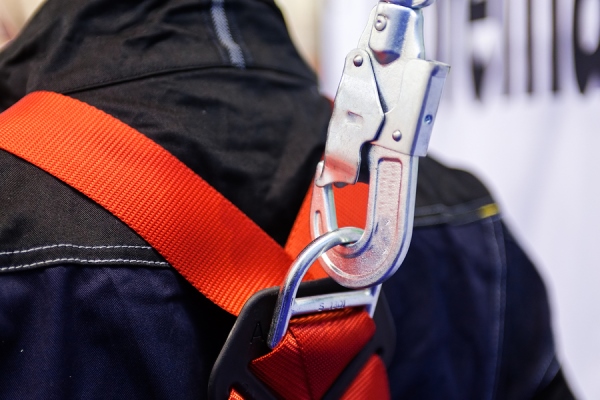
Personal fall protection systems such as harnesses can be a lifesaver for those who continually or occasionally work at heights. However, if it isn’t in good shape, you could be putting your life in a risky situation. It is important to inspect your fall protection gear prior to every use.
Always follow the recommendations of the manufacturer of your gear for inspections and maintenance requirements. Here are some things to look for:
Harness Inspection
Begin by holding the harness up by the D-ring. Bend the straps in an inverted “U.” Watch for frayed edges, broken fibers, pulled stitches, cuts or chemical damage. Check D-rings and D-ring metal wear pads for distortion, cracks, breaks, and rough or sharp edges. The D-ring bar should be at a 90-degree angle with the long axis of the belt and should pivot freely.
Attachments of buckles and D-rings should be given special attention. Note any unusual wear, frayed or cut fibers, or distortion of the buckles. Rivets should be tight and unmovable with fingers. Body side rivet base and outside rivets should be flat against the material. Bent rivets will fail under stress.
Inspect frayed or broken strands. Broken webbing strands generally appear as tufts on the webbing surface. Any broken, cut or burnt stitches will be readily seen.
Tongue Buckle: Buckle tongues should be free of distortion in shape and motion. They should overlap the buckle frame and move freely back and forth in their socket. Rollers should turn freely on the frame. Check for distortion or sharp edges.
Friction Buckle: Inspect the buckle for distortion. The outer bar or center bars must be straight. Pay special attention to corners and attachment points of the center bar.
When inspecting lanyards, begin at one end and work to the opposite end. Slowly rotate the lanyard so that the entire circumference is checked. Spliced ends require particular attention.
Snap hooks: Inspect closely for hook and eye distortion, cracks, corrosion, or pitted surfaces.
The keeper, or latch, should sit into the nose without binding and should not be distorted or obstructed. The keeper spring should exert sufficient force to firmly close the keeper. Keeper rocks must provide the keeper from opening when the keeper closes. Closing/locking mechanism should move freely without sticking or jamming.
While bending webbing over a piece of pipe, observe each side of the webbed lanyard. This will reveal any cuts or breaks.
The outer portion of the shock-absorbing pack should be examined for burnt holes and tears.
Stitching on areas where the pack is sewn to the D-ring, belt or lanyard should be examined for loose strands, rips and deterioration.
Every day in the United States five to 10 arc flash explosions occur in electrical equipment. Anyone exposed to such explosions is at significant risk for death or serious injury.
Arc flash is described by the National Fire Protection Association as “a dangerous condition associated with the release of energy caused by an electric arc.” A reduction of the insulation or isolation distance between energized components is responsible for this condition.
For example, a tool that is inserted or accidentally dropped into a breaker or service area, or other objects that are left behind, may compromise the distance between energized components.
Incidents may occur when a worker fails to ensure that equipment has been properly de-energized prior to service or inspection. Arc flash incidents typically occur in applications exceeding 120 volts.
Serious damage to equipment is likely an outcome in an arc flash incident. Sometimes affected equipment is so badly damaged that replacement is the only option. And, of course, the human body is equally capable of being destroyed or irreversibly damaged, with no replacement option.
The following arc flash safety reminders from Square D Products, a well-known producer of electrical equipment, can help company better protect their employees:
Establish a written electrical safety program with clearly defined responsibilities covering all of your company’s electrical safety policies, including lockout/tagout, internal safety policies and responsibilities for electrical safety.
Have an engineering firm conduct an electrical system analysis to determine the degree of arc flash hazard present at your workplace. The analysis will define the type of personal protective equipment (PPE) that your workers must use while performing any work when energized parts are exposed.
Conduct arc flash safety training for all employees. It should be specific to the hazards of arc flash, arc blast, shock and electrocution. Ensure adequate personal protective clothing and equipment is on hand.
Ensure the proper tools are on hand for safe electrical work. This includes insulated voltage-rated hand tools and insulated voltage sensing devices that are properly rated for the voltage application of the equipment to be tested.
Any electrical equipment that is likely to require examination, adjustment, servicing or maintenance while energized must have arc flash warning labels posted in plain view. Such equipment includes switchboards, panel boards, industrial control panels, meter socket enclosures and motor control centers.
Appoint an electrical safety program manager. This should be a well-organized, responsible person who is familiar with electrical code requirements and other safety issues.
Maintain all electrical distribution system components. Modern, properly adjusted over-current protective devices that are properly maintained can detect an arcing condition almost instantly and clear the fault quickly. This capability significantly reduces the amount of incident energy that is released.
Finally, maintain and update all electrical distribution documentation. This is especially critical when expanding or revising facilities.
Fatigue is the condition of being physically or mentally tired or exhausted. Extreme fatigue can lead to uncontrolled and involuntary shutdown of the brain.
Fortunately, there are ways to fight fatigue:
Get eight hours of sleep before starting work.
Sleep at the same time each day. If they rotate shifts, establish clockwise rotations (from day to evening to night). Clockwise rotating makes it easier to go to sleep when a worker goes to bed.
Take all scheduled work breaks. A snack or exercise during the break will refresh them.
When trying to sleep during the daytime, find a cool, dark, quiet location. Use earplugs, soft music, or a fan to block out noise.
See their doctor about sleep disorders, medications for illness, and using bright light on the job or during waking hours.
Eat a well-balanced diet beginning the “day” with high protein foods and ending with carbohydrates. Do not eat great quantities before bedtime; they may cause trouble sleeping.
Avoid caffeine, alcohol, and cigarettes. These substances cause sleep disturbances.
Walking, stretching, and aerobics can help a person stay awake. Exercise will give you stamina and help you to fall asleep later.
Work carefully and very methodically, always following proper procedures.
When you’re fatigued you will make errors in judgment. Your mind or eyes can be off task, and you can make a critical error.
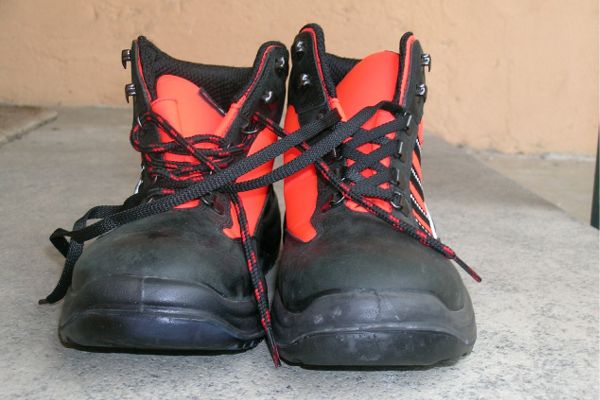
Foot protection means guarding your toes, ankles and feet from injury. Believe it or not, your feet have 26 bones for support and 38 joints for movement — in each foot. Feet also have blood vessels, ligaments, muscles and nerves, which is why it hurts when you stub your toe or drop something on your foot. Your feet are a critical part of your body that you use every day and, in some cases, enable you to do your job effectively.
Protective footwear worn in the workplace is designed to protect the foot from physical hazards such as falling objects, stepping on sharp objects, heat and cold, wet and slippery surfaces, or exposure to chemicals.
There are two major categories of work-related foot injuries. The first category includes foot injuries from punctures, crushing, sprains, and lacerations. They account for 10 percent of all reported disabling injuries. The second group of injuries includes those resulting from slips, trips, and falls. They account for 15 percent of all reported disabling injuries. Slips and falls do not always result in a foot injury but lack of attention to foot safety plays an important role in their occurrence.
What should workers know when buying footwear for work? Good footwear should have the following qualities: o The inner side of the shoe must be straight from the heel to the end of the big toe. o The shoe must grip the heel firmly. o The forepart must allow freedom of movement for the toes. o The shoe must have a fastening across the instep to prevent the foot from slipping when walking. o The shoe must have a low, wide-based heel; flat shoes are recommended.
People buying footwear for work should take the following advice: o Do not expect that footwear that is too tight will stretch with wear. o Have both feet measured when buying shoes. Feet normally differ in size. o Buy shoes to fit the bigger foot. o Buy shoes late in the afternoon when feet are likely to be swollen to their maximum size. o Consider purchasing shock-absorbing insoles when a job requires walking or standing on hard floors.
There is unnecessary exposure to hazards for workers across the country every single day. The list of possible unsafe actions and unsafe conditions employees deal with in their work can be limitless. One scenario that often results in unnecessary exposure to hazards is doing work wrong the first time. Even if a work task is being completed safely, but is being done incorrectly the first time around, whoever has to go back and redo the work will inherently be put at risk for injury just by the mere fact that additional work has to be performed.
Reasons Why Work Tasks are Done Incorrectly
There are many reasons why work is not done correctly the first time or even the second time around. Some reasons to consider:
It is important to stop work anytime you have questions about the task you are about to complete or in the process of completing when unsure. Doing work incorrectly will result in a loss of production as well as put individuals at unnecessary risk to redo the work. It may not seem like a big deal for small tasks, but even a simple wrong decision can lead to injury.
A quick example: You are grabbing an order of five gallons of paint for a customer, but you are not sure what brand it is, so you decide to chance it and pick one. After bringing the bucket up to the front of the store, the cashier tells you it is not that brand. You rush back to the warehouse, leaving the other paint bucket in the front. When she does this, she injures her back and misses a few days of work.
Summary
While the example provided here is a simple one, you can see how issues arise when work tasks are done incorrectly, even in a safe manner, the first time around. In construction or manufacturing that involves hazardous processes, the consequences and likelihood of injury greatly increase when work has to be redone. Realize the impact your decisions have, not only on yourself, but your coworkers as well.
We are all trained to report any near misses, injuries, or incidents to a supervisor or safety representative. Oftentimes, however, many of these incidents, especially first-aid type injuries, are not reported. Injuries are not reported because of many different reasons, but it is important to understand why all of them need to be.
Reasons Why Incidents Go Unreported
There are many reasons why incidents such as property damage, near misses, spills, and injuries go unreported. A major reason is often the individual’s pride. Most people do not want to admit their mistakes to others, especially at work. They may also fear the outcome of sharing what occurred with a supervisor.
This fear may come from being afraid of being disciplined, what others think, or the repercussions of the incident. Another reason a person may not want to report an incident is because of the paperwork or energy involved in doing so. There are many other reasons why an individual may not want to share what happened to them, but this should never be the case.
Why it is Important to Report Injuries
There are many reasons why you should report any type of injury, no matter the severity. The most important reason is to make sure the situation or hazard is made safe for not only yourself, but the others at the worksite. Another reason is to share your experience or the lessons learned from the incident with others to prevent it from occurring in the future.
With injuries, even just minor ones, it is important to get them looked at by a supervisor or safety representative. While many injuries, such as a small cut or an insect sting, may not seem like a big deal, they can turn into one.
A quick example: You are bit by some type of insect on a Friday afternoon at work, but decide not to tell anyone for various reasons. You leave work and are home for a few hours when you notice that the bite area is beginning to swell up. Along with the swelling, you notice that you have hives and are having trouble breathing. You realize it is a serious allergic reaction and needs medical attention. You tell the doctor you were bit or stung at work, and the treatment he gives you ends up being considered “medical attention.”
Because it happened at work and you needed medical attention beyond first aid, it is now an OSHA recordable injury. In this situation, there are a few problems since the injury was not reported to someone at work immediately.
1. There is no record or witness to it happening at work, which could raise concern by the employer whether or not the injury occurred at work. This may end up in a drawn-out dispute since there have been many people in the past who have faked or had injuries off the job, but stated it occurred at work in an attempt for it to be paid through worker’s compensation.
2. If the injury was reported immediately, someone may have been able to recognize that it may develop into an allergic reaction. There could have been options for first aid instead of medical treatment to treat the issue before it worsened, which would have saved you a trip to the hospital and the company an OSHA recordable.
Summary
All injuries need to be reported, no matter how small. Not only does it protect you, but it also protects the company as a whole by possibly preventing a first aid injury from progressing into an OSHA recordable. You never know when something that seems minor in nature will develop into something more serious. There are also always lessons that can be learned, even from just minor injuries, to prevent others from occurring in the future.
Patti, a 17-month-old yellow lab, is UD Police’s first facility dog, providing mental health support, aiding victims, and building community trust through daily campus engagement and critical incident response. (UDAILY)
There are many allergens that can cause an allergic reaction. One of the most common allergens and hardest to avoid are insect stings. According to the American Academy of Allergy Asthma and Immunology, it has been estimated that potentially life-threatening allergic reactions to insect venom occur in 0.4 percent to 0.8 percent of children and 3 percent of adults. Even after experiencing a normal reaction to insect stings, it is possible to experience a more serious allergic reaction at any time during your lifetime.
It is important to avoid insect stings whenever possible, as well as how to respond when someone is suffering from a severe allergic reaction.
Insect Stings in the United States
According to AAACI.org, there are five insects that cause the majority of allergic reactions in the United States. These insects are honeybees, hornets, wasps, yellow jackets, and fire ants. According to NIOSH, thousands of people are stung by insects each year, and as many as 90–100 people in the United States die as a result of allergic reactions. This number may be underreported as deaths may be mistakenly diagnosed as heart attacks or sunstrokes or may be attributed to other causes. Insect stings can result in any of the following symptoms:
Pain
Redness
Swelling (in the area of sting and sometimes beyond)
Flushing
Hives
Itching
Anaphylaxis
Anaphylaxis
Anaphylaxis is the most serious reaction to allergens there is. Anaphylaxis is a life-threatening whole-body allergic reaction that can impair your breathing, cause a dramatic drop in your blood pressure, and affect your heart rate. Anaphylaxis requires immediate medical treatment, including an injection of epinephrine and a trip to a hospital emergency room. If it isn’t treated properly, anaphylaxis can be fatal.
Best Practices in Avoiding Insect Sting Allergic Reactions
Avoid stinging insects whenever possible.
If you know you have severe reactions to insect stings, do not complete work tasks that put you at great risk of being stung.
Inspect work areas prior to completing any work to ensure there are no insect nests that could be disturbed.
Wear long sleeves and long pants in case of an insect attack.
Have an EPI pen on hand in case of a sting, and ensure your coworkers know where it is. If you suspect someone is suffering some type of serious allergic reaction immediately call 911, even if an EPI pen has been used.
Discussion points:
-Does anyone have an allergy to insect stings?
-Has anyone experienced someone suffering from a severe allergic reaction?
The University of Delaware’s research vessel Hugh R. Sharp received major upgrades as it nears 20 years of service, enhancing its capabilities for marine research, education, and student experiences at sea. (UDAILY)